EN
EN



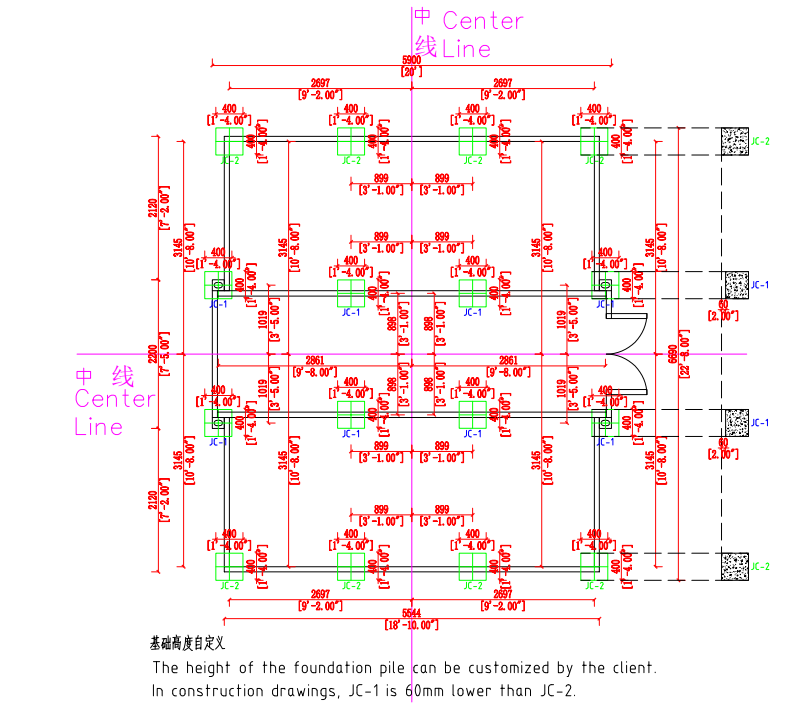
Why Standard Foundations Aren’t Enough for an Expandable House
How Phased Expansion Changes Load Distribution Over Time
When building houses that can grow over time, there's something special about how they handle weight distribution. The original foundation doesn't need to carry everything at once since most of the weight comes later when additional sections get added. What happens next? Well, as these extra parts go on, the weight shifts around the existing structure. If the base wasn't built with expansion in mind, problems start showing up pretty quickly. According to some studies from Ponemon back in 2023, nearly two-thirds of all home expansions see noticeable changes in where the weight sits after just five years. Regular house foundations simply weren't made for this kind of shifting burden. Homeowners frequently end up dealing with cracks appearing in walls or floors feeling unstable when those new rooms finally connect to the main part of the house.
The Critical Gap: Building Codes Don’t Address Future-Phase Loads
Building codes tend to concentrate only on what structures can handle right now, which leaves a big gap when it comes to projects that happen in stages over time. Most local governments don't really require anything about how buildings might expand down the road, so contractors end up making things up as they go along. Take frost protection rules for instance. These usually apply just to whatever space gets built first, completely ignoring areas that get added later on. Because of this missing piece, engineers often have to go beyond standard requirements. They'll add extra steel supports or create footings that can be adjusted later, something mentioned in the International Building Code (IBC) guidelines. If folks skip these workarounds, their foundation could run into trouble satisfying code requirements once new parts of the building get constructed months or even years later.
Soil and Site Conditions That Demand Expansion-Ready Foundation Design
Bearing Capacity Requirements for Multi-Phase Load Scenarios
The ground beneath any structure needs to handle not just what gets built right away but also whatever comes later down the road. Many standard foundation designs fall apart over time because engineers focus too much on the first few months of weight distribution rather than thinking ahead about all those extra floors or expansions that might get added years from now. When we test soil conditions, we look at things like how tightly packed it is and how well it can resist sideways forces before giving way. These tests tell us if the earth can safely hold up the building without sinking or shifting. Clay tends to support around 1,500 to 3,000 pounds per square foot generally speaking, whereas sandier ground usually handles between 2,000 and 6,000 psf. But here's the catch – these numbers need to account for everything planned for the site eventually, not just what stands there today. Contractors who skip looking at long-term loading patterns run serious risks. Foundations start cracking when they push beyond what the soil was actually capable of holding, especially after subsequent construction phases are completed.
Mitigating Differential Settlement Across Initial and Future Footprints
Uneven settling between existing and new sections threatens expandable house integrity—especially when original foundations have stabilized while new footings compress underlying soil differently. Proven mitigation strategies include:
- Pre-compacting future expansion zones during initial construction
- Installing grade beams to distribute loads uniformly across both phases
- Using soil stabilization techniques like lime injection for cohesive soils
Research shows differential settlement causes 34% of structural failures in modular additions. Proactive mitigation during foundation design prevents costly repairs and preserves alignment across all construction phases.
Foundation Types Proven for Expandable House Longevity and Flexibility
When building an expandable house, standard foundations often fail to accommodate future modifications. Purpose-built solutions address the dynamic load shifts and phased construction needs inherent to adaptable dwellings. Two systems consistently demonstrate reliability:
Monolithic Slab-on-Grade with Expansion Joints and Stubbed Utilities
Continuous concrete slabs offer consistent support across their surface area, and they handle expansion pretty well when we put those control and isolation joints in the right spots. The big systems like heating, electricity, and water pipes get installed ahead of time at these expansion points so when new sections need to be added later, everything just fits together without tearing things apart. According to research from the Foundation Engineering Institute last year, slabs where the joints are spaced less than 25 feet apart cut down on settlement problems by about 37 percent. Getting this stuff right really comes down to making sure the ground underneath is packed properly, knowing exactly how deep frost can go in different areas, and keeping track of all those utility lines during planning stages.
Engineered Pier-and-Beam Systems for Modular or Sequential Additions
Foundations raised above ground level using concrete piers and steel beams work really well when dealing with hillsides or soil that isn't very stable. The way these foundations are built lets contractors create separate footings if someone wants to add onto their house later on. This means there's less chance of problems between old and new parts of the building, which helps avoid those annoying cracks from uneven settling. Most homes have load-bearing walls that line up right where the piers are placed, and there's usually enough space underneath for running pipes and wires without tearing things apart. According to reports from residential construction experts, these elevated systems can handle about 68 percent more different kinds of terrain compared to regular slab foundations. Of course, they do cost around 15 to 20 percent more upfront, but many builders argue it's worth the extra money for all the flexibility they offer down the road.
Navigating Permits: How Jurisdictions Evaluate Expandable House Foundations
The rules about permits for expandable homes really depend on where someone lives, since different places have their own ideas about zoning and what risks matter most. Out in the country, many officials see phased building as something temporary, which makes getting approval much easier. Things get trickier in cities though, where these kinds of projects are usually treated as permanent structures right from the start. That means builders must follow all building code requirements for the whole house even if they're only constructing part of it now. Most regular building codes don't actually cover what happens when additional sections get added later, so smart homeowners should get those official stamped engineering plans ready before starting work. These documents need to show exactly how the foundation handles gradual weight increases, where utilities will connect later, proper expansion joints, and whether the ground can support everything over time. Talking to city planners early on saves headaches down the road because nobody wants to deal with unexpected paperwork or having to tear things apart just because someone forgot to check the fine print.
FAQ
Why aren't standard foundations suitable for expandable houses?
Standard foundations aren't designed for future load increases and phased construction, leading to potential structural integrity issues like cracking as expansions occur. They often fail to accommodate shifting weight distributions over time.
How can owners address foundation requirements for future expansions?
Owners should consider using engineered foundations like monolithic slab-on-grade with expansion joints or pier-and-beam systems. These are designed to handle future expansions effectively.
Are building codes a challenge for expandable houses?
Yes, building codes often don't account for phased development, requiring owners and builders to create engineering plans that address future load scenarios and code compliance down the road. Early interaction with planners is crucial.