EN
EN



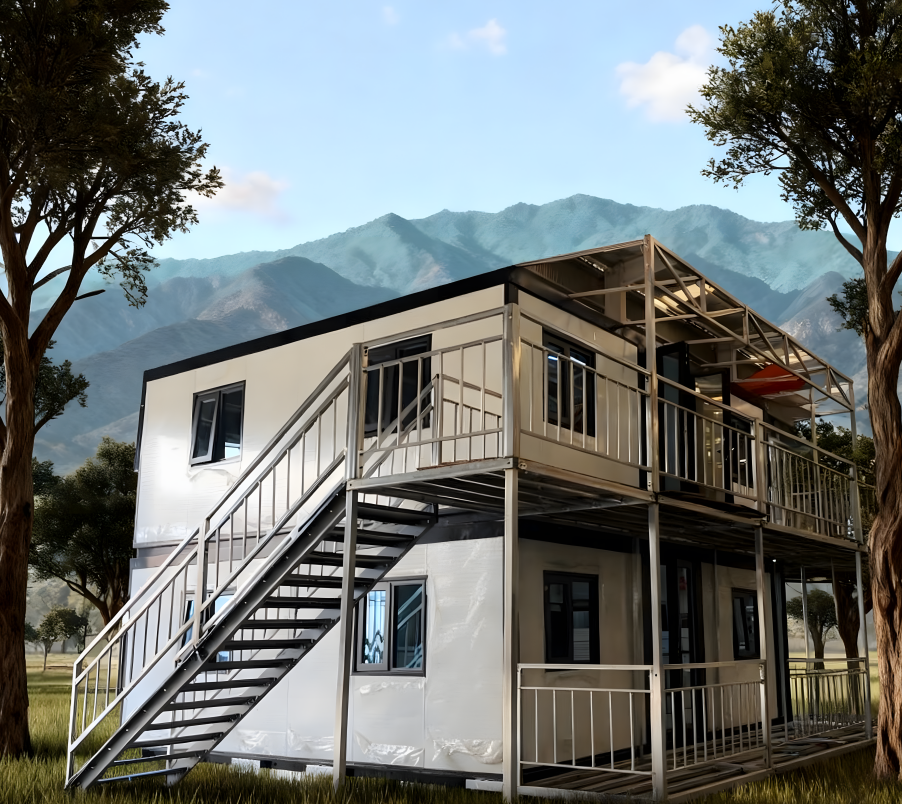
Structural Feasibility of Stacking Modular Houses
Load-Bearing Capacity and Material Specifications for Vertical Stacking
When it comes to modular homes that can be stacked vertically, the secret lies in their engineered structural frames, mostly made of steel. These frames offer impressive strength relative to their weight. Most modular units weigh between 1.5 and 2 kilonewtons per square meter, which means they can safely stack up to ten floors high if built according to standards like ASTM A653 and EN 1090-2. Steel columns usually get extra carbon reinforcement so they don't bend under all those layers above. Meanwhile, internal bracing helps overcome the width restrictions imposed by transportation regulations, typically around 3.6 meters or less. Design engineers need to account for everything from static building weight to people walking around inside plus forces from nature itself like wind pressure and earthquake risks. Their calculations determine how thick walls should be, where floor supports go, and what kind of connections are needed between sections. The goal is simple really: make sure bottom modules can handle all that weight pressing down without any noticeable sagging, something that meets the ISO 19901-4 specs for long term modular construction projects.
Inter-Module Connections, Alignment Tolerances, and Compression Management
The structural integrity of stacked modular buildings really depends on how well the modules connect to each other. These connections typically involve high tensile steel brackets that have bolted joints designed to handle both shear and bending forces. They also need to account for thermal expansion when temperatures change throughout the day. During installation, laser guided leveling helps keep everything aligned within about 3mm tolerance, which is super important for maintaining proper load paths through the structure. At the corners where modules meet, adjustable bearing pads spread out the weight so it doesn't all concentrate in one spot, reducing stress points between sections. After installation is complete, hydraulic jacks come into play to manage any settling that happens over time. This process follows guidelines set forth by the Modular Building Institute in their Permanent Modular Construction document. For monitoring purposes, builders install tilt sensors and strain gauges throughout the system. These devices track position changes and compression levels in real time, making sure everything performs according to what was predicted in structural models. Most importantly, when constructed properly following these methods, these stacked systems generally satisfy or even surpass the requirements outlined in IBC Chapter 16 and ASCE 7-22 regarding earthquake and wind resistance standards.
On-Site Execution: Craning, Sequencing, and Precision Stacking
Crane Logistics, Site Constraints, and Real-Time Alignment Protocols
Getting multi-story modular units stacked properly requires serious planning upfront. Before any lifting happens, contractors need to check things like how equipment gets onto the site, what the cranes can actually reach, whether the ground will support the weight, and where existing utilities might interfere. According to industry reports, around one out of five modular construction delays comes down to cranes being positioned wrong from the start, which makes good logistics coordination absolutely essential. When it comes time to place the modules, contractors rely on laser guides and sensors that monitor tilt in real time to keep everything within about 5 millimeters vertically. At key stress points, strain gauges get installed to make sure the weight distribution works as planned in the designs, stopping small stresses from building up over time and potentially causing structural issues later on. Most Permanent Modular Construction (PMC) projects follow these procedures as part of meeting requirements set by organizations like MBI through their PMC Standards program, since getting official approval for taller buildings usually depends on proving how well these systems work in actual field conditions.
Regulatory Pathways for Multi-Storey Modular House Projects
Zoning Approval, Fire Safety Compliance, and Seismic Adaptation for Permanent Modular Construction
Getting regulatory approval for multi story modular housing depends on getting three main things right zoning rules, fire safety standards, and how well the buildings can handle earthquakes. For zoning approvals, developers need to show they meet local regulations about building heights, setbacks from property lines, and what kind of development is allowed in specific areas. Many urban infill projects end up asking for special permissions through variance applications backed by reports from independent engineers. When it comes to fire safety, there are strict requirements for floors and walls between units needing at least two hour fire ratings according to ASTM E119 standards. The escape routes also have to be properly separated as outlined in IBC Section 707. Buildings in earthquake prone areas face additional challenges. Connections between modules must pass cyclic tests following ANSI/APA PRG 320 guidelines. Some designs incorporate base isolation systems or extra damping mechanisms when the site's risk assessment indicates it's necessary. Standard certifications such as ICC ES AC462 help speed up the approval process, but many local governments still want extra documentation showing structural integrity over time, ways to prevent heat loss at connection points, and protection against rust especially important for steel frames in coastal regions or places with lots of moisture in the air.
Proven Applications: Multi-Storey Modular House Case Studies
The Graphic, Mayfair, and Steveston Highway: Design, Delivery, and Performance Insights
Take a look at The Graphic in Boston, Mayfair in London, and Steveston Highway in Vancouver as real world examples of how volumetric modular construction can actually work wonders for high density housing. At The Graphic they managed to fit 87 prefabricated units behind this amazing historic facade. What does that mean? Construction on site took about 40% less time compared to regular buildings, and people could move in 30% quicker too, all while keeping the original architecture intact. Steveston Highway's five story building had something crazy going on - it maintained less than 1.5mm alignment between modules thanks to those strong connections between them and those factory calibrated plates. After people started living there, they noticed energy consumption dropped by around 25% compared to similar buildings constructed on site. Why? Because everything from insulation to air sealing was done consistently in the factory. Then there's Mayfair where they used 202 modules throughout their upscale mid rise building. They scheduled crane operations during times when traffic wasn't so bad, which helped minimize disruptions in the city. Monitoring over three years showed compression variance below 0.02%, way under what ASTM E2837 considers acceptable for long term stability. These case studies show us clearly that when factories produce with precision and sites execute properly while following regulations, modular homes not only match but often surpass traditional construction in terms of durability, efficiency, and safety.
FAQ
Can modular homes be stacked vertically?
Yes, modular homes can be stacked vertically up to ten floors if constructed under appropriate standards and conditions.
What materials are used in modular homes for stacking?
Engineered structural frames, mostly made of steel, are used for stacking modular homes due to their strength.
What are the key challenges in stacking modular homes?
The key challenges include ensuring proper load-bearing, inter-module connections, regulatory compliance, and precise on-site execution.
What are common regulatory requirements for stacked modular homes?
Regulatory requirements often include zoning approvals, fire safety compliance, and earthquake adaptation guidelines.