EN
EN



Understanding the Expansion Potential of Modular Homes
What Is Meant by Expansion Potential in Modular House Design?
When we talk about expansion potential in modular homes, what we really mean is how well these houses can grow with families as their space requirements change over time. Traditional stick-built houses just don't offer this kind of flexibility because they're constructed all at once on site. Modular homes come from factories with pre-made sections that fit together like puzzle pieces. The beauty of this system is that when homeowners want more room, they simply add another module without worrying about compromising the whole structure or messing up the original design. Many people find this particularly appealing since it saves money compared to tearing down walls or building entirely new structures later on.
How Modular Construction Supports Future Expansion of Prefabricated Homes
Factory built homes offer something pretty special when it comes to creating living spaces that can grow with families while causing less mess at the construction site. The way these buildings are designed actually makes it possible to stack them vertically or expand horizontally as needed. Looking at industry data from early 2024 shows that adding onto a modular home happens anywhere between 30 to almost 50 percent quicker compared to traditional renovation methods. Take one real life example from last year where a family managed to get two extra bedrooms plus a lovely sunroom added to their modular house within just 12 short weeks. That's about half what most contractors would charge for similar work done conventionally onsite.
Key Factors Influencing Flexibility in Modular Home Layouts
Three critical elements determine how easily a modular home can be expanded:
- Design Foresight: Initial plans incorporating designated expansion zones reduce modification costs by up to 40% (Modular Construction Institute 2023)
- Structural Compatibility: Standardized module widths (typically 12–16 feet) ensure predictable integration of future additions
- Local Regulations: 68% of U.S. municipalities now offer expedited permitting for modular additions (Zoning Efficiency Index 2024)
Proactive planning during the design phase helps avoid issues like misaligned foundations or rooflines, ensuring cost-effective and structurally sound adaptations over time.
Designing for Growth: Planning Modular House Expansions from the Start
Customization and Initial Design Flexibility in Modular Houses
Modular homes start out ready for change right from the beginning. Builders tend to include features that make room for growth when they first draw up plans. Think about things like putting in extra plumbing lines and running electrical wires along paths where walls might go later on. Look at how these expandable homes work their magic really. When foundations are built bigger than needed and windows positioned carefully ahead of time, adding onto the house down the road becomes much easier. The best part? These smart design choices don't hurt energy savings or weaken the building's strength either.
Incorporating Future Expansion into Modular Home Floor Plans
Forward-thinking floor plans use standardized connection interfaces to maintain structural continuity during upgrades. Non-load-bearing interior walls and consistent rooflines across expansion zones enable flexible reconfiguration. This method reduces construction waste by 30–40% compared to traditional renovations (Green Building Council, 2023), making it a more sustainable path to growth.
Modular House Layouts for Growing Families and Changing Needs
Homes designed for evolving households prioritize adaptable spaces over fixed rooms. Research confirms that properties built with dedicated expansion zones retain 94% architectural harmony after modifications, significantly higher than the 67% seen in conventionally remodeled homes (archiroots.com/house-modular-homes/). Key design features include:
- Double-stud exterior walls for easy installation of future doors or windows
- Centralized mechanical hubs to simplify system upgrades
- Roof trusses pre-rated to support potential second stories
Case Study: Phased Expansion of a Modular Family Home
The Carter residence grew from 1,200 to 2,400 sq ft over six years through three phased additions:
- Year 2: West-wing master suite
- Year 4: Second-story home office
- Year 6: Four-season sunroom
Pre-engineered connection points allowed each addition to integrate seamlessly, preserving the home’s energy-efficient envelope and cutting on-site construction time by 60% per phase.
Types of Modular House Additions: Vertical, Horizontal, and Structural Options
Adding Rooms or Floors to a Modular House: Feasibility and Approvals
When looking to expand a modular home, the first step is checking what the local zoning rules allow plus going through what the manufacturer recommends. Many areas need special permits if someone wants to add space that's more than 10% bigger than what was originally built. Most big name builders actually plan ahead for possible expansions by including special joints and ready made connection points throughout the structure. According to research published last year, around four out of five people who tried expanding their modular homes managed to get it done right as long as they stuck closely to the instructions provided by whoever constructed their initial dwelling.
Vertical Expansion: Multi-Story Configurations in Modular Homes
Adding upper floors requires verification of foundation load capacity and wind resistance compliance. Modular systems using steel frames or cross-laminated timber (CLT) are particularly well-suited for safe vertical stacking. For example, rotating identical upper modules 90° enhances stability—a technique validated in modular construction research.
Horizontal Expansion: Detached Units and Wing Additions
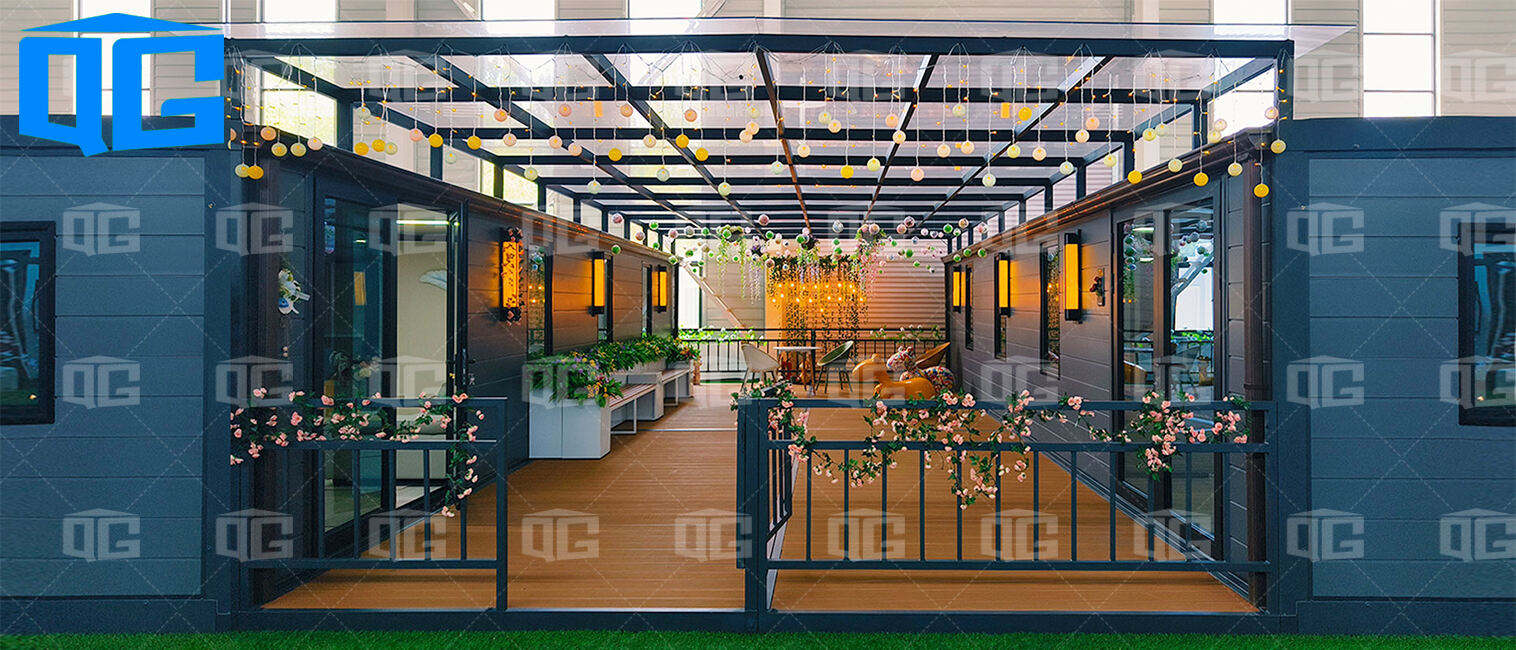
Detachable “satellite” modules placed 6–10 feet from the main structure provide flexible living space while adhering to setback regulations. These units can be connected via:
- Climate-controlled glass corridors
- Retractable deck systems
- Underground utility tunnels
This configuration offers functional separation without sacrificing connectivity.
Structural Modifications: Walls, Roofs, and Foundations in Modular Houses
Non-load-bearing interior walls can be reconfigured post-installation using original panel specifications. Roof expansions require matching pitch angles within ±2° tolerance and proper weatherproof flashing at seams. When adapting foundations, helical piers are often more efficient than concrete pours, reducing site disruption by 40% compared to traditional methods.
Cost, Efficiency, and Long-Term Value of Expanding Modular Houses
Average Cost of Modular House Renovations and Additions
Modular expansions typically cost $100–$300 per square foot, depending on complexity, materials, and regional labor rates. A 500 sq.ft. addition ranges from $50,000 to $150,000—significantly less than the $200–$400/sq.ft. average for site-built equivalents. Factory precision reduces material waste by 15–30% (2024 Modular Construction Cost Report), while standardized designs lower engineering fees by 10–20%.
Modular vs. Site-Built Home Expansion: A Cost Comparison
| Factor | Modular Expansion | Traditional Expansion |
|---|---|---|
| Cost Per Sq.Ft. | $100 – $300 | $200 – $400 |
| Timeline | 3 – 6 months | 6 – 12 months |
| Labor Waste | 8–12% | 15–25% |
| Energy Efficiency | 25–35% higher | Baseline |
Modular projects benefit from parallel factory and on-site work, completing 40–60% faster than conventional builds. A two-story modular addition averages $95,000, compared to $145,000 for stick-built versions.
Long-Term Savings Through Future-Proofing Modular House Designs
When homeowners think ahead about expanding their homes from day one, they end up saving around 18 to maybe even 32 percent on those inevitable future renovations thanks to things like already having utility connections and proper structural supports in place. Houses built with flexible floor plans tend to fetch about 7% to 12% more when it comes time to sell compared to traditional fixed layout homes. And let's not forget about the money saved over time either. According to recent research published in the 2023 study on expandable housing, smart planning at the start cuts down long term repair bills somewhere between twenty eight thousand and forty two thousand dollars. The reason? When making changes later on, there's simply less need for tearing walls down or doing expensive retrofits.
Overcoming Challenges in Modular House Expansions
Navigating Permits and Zoning for Modular House Additions
Regulatory requirements vary widely by municipality, creating challenges for expansion projects. While modular multifamily construction grew 7% annually—the highest rate in two decades—single-family expansions still face hurdles in high-demand areas like California (Dragone 2025). Early coordination with local planning departments improves approval success and clarifies feasible expansion parameters.
Matching Aesthetics Between New Additions and Existing Modular Houses
Manufacturers support visual continuity by archiving original materials, finishes, and production techniques. Reusing consistent roof pitches, window patterns, and cladding resolves approximately 80% of aesthetic mismatch issues. Some providers now offer digital twins of existing homes to simulate and refine additions before fabrication, enhancing design accuracy.
Ensuring Structural Integrity During Modular House Expansion
All expansions must undergo professional engineering review to confirm foundation compatibility and load-bearing capacity. Standardized connector systems facilitate integration when new modules follow original design schematics. Third-party inspectors recommend allocating a 10–15% budget contingency for unexpected reinforcement, especially for homes older than 10 years.
FAQ Section
What are the main benefits of modular house expansion?
The main benefits include cost savings, quicker construction timelines, reduced on-site disruption, and the flexibility to meet changing needs.
Can modular homes be expanded both vertically and horizontally?
Yes, modular homes can be expanded both vertically and horizontally, provided the structural integrity and local zoning laws are considered.
How does modular expansion compare to traditional home expansion in terms of cost?
Modular expansion typically costs less per square foot than traditional home expansion due to factory precision and less material waste.
Do modular extensions affect the energy efficiency of the home?
Properly planned modular extensions can enhance energy efficiency and retain architectural harmony much better than traditional methods.
Table of Contents
- Understanding the Expansion Potential of Modular Homes
- Designing for Growth: Planning Modular House Expansions from the Start
- Types of Modular House Additions: Vertical, Horizontal, and Structural Options
- Cost, Efficiency, and Long-Term Value of Expanding Modular Houses
- Overcoming Challenges in Modular House Expansions
- FAQ Section